ServicesTrack and Sill Cleaning
Window Track and Sill Cleaning in Ridgeville
Dirty tracks make windows stick, and dirty sills hold mildew. We vacuum out the grit, scrub the corners and wipe each sill by hand. Your floors stay covered, and we walk through the plan with you before we start and after we finish.
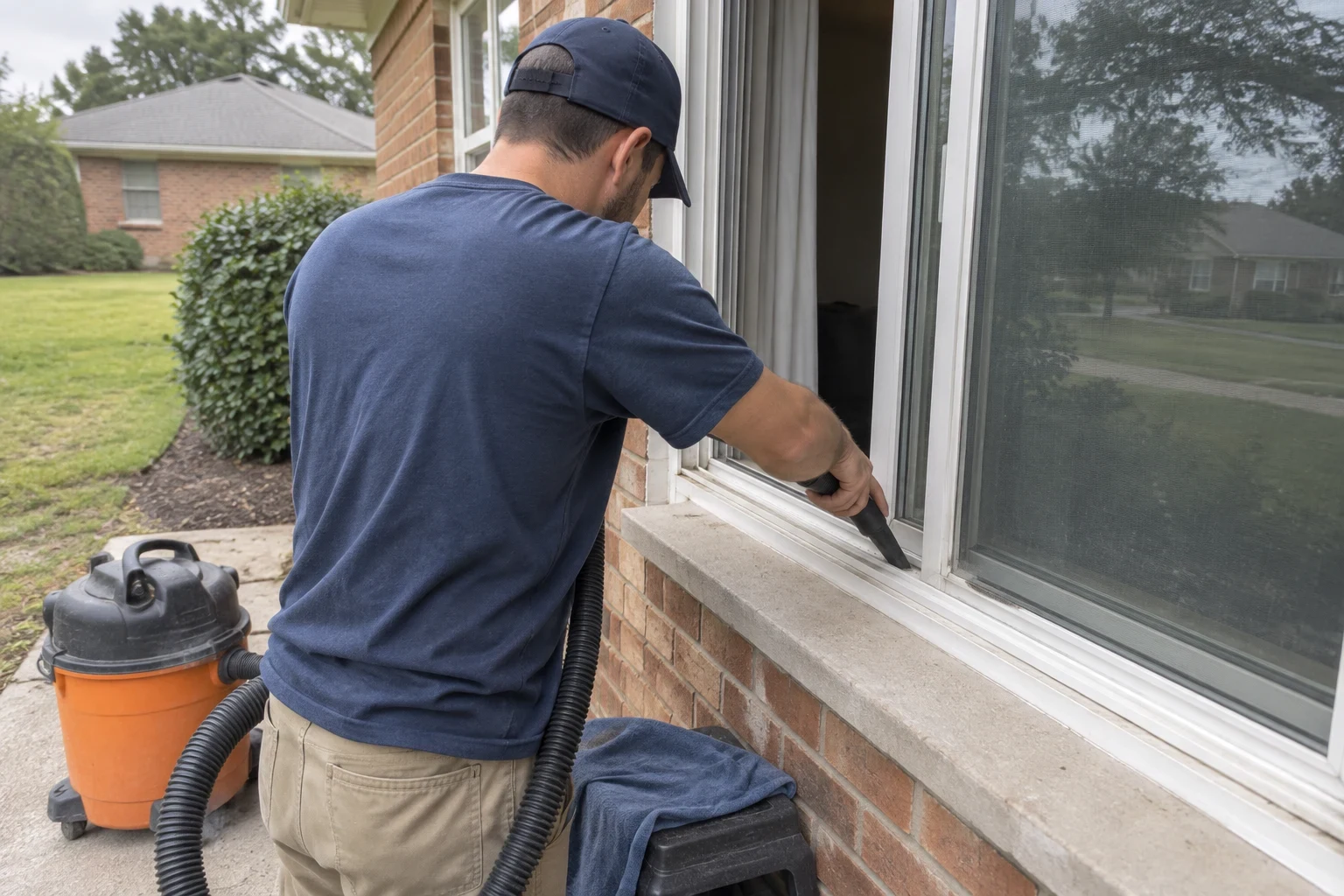
What track and sill cleaning covers
The track is the channel your window slides in. The sill is the flat ledge below it, inside and out. Both catch what falls off the glass: dust, pollen, dead bugs, sand and the water that runs down the panes. Over time it packs into a gray paste that a paper towel won't move.
We clean them with small tools made for the job. Vacuum first, then brushes, then a damp cloth and a mild cleaner. On sliding doors and older windows, that packed grit is often the reason the sash drags or the lock won't line up.
Most people add this to a residential window cleaning visit, since clean glass over a dirty track still looks half done. You can also schedule it on its own.
What we do at each window
Dry vacuum first
We pull out loose dirt, sand and bug parts with a crevice vacuum before any water touches the track. Wetting dry grit first just turns it into mud you have to chase around.
Corners brushed out
Detail brushes and thin plastic scrapers reach the corners and the slots where the track meets the frame. That is where most of the buildup sits.
Drain holes cleared
Many tracks have small weep holes along the outside edge. When they clog, rain sits in the track instead of draining away. We open them up and check that water runs through.
Sills wiped inside and out
We wash painted, vinyl and wood sills with a mild cleaner and a well-wrung cloth, so no water is left soaking into wood or caulk.
Mildew spots treated
Black spotting gets a gentle cleaner suited to the surface. If a spot looks deeper than the surface, like soft wood or cracked caulk, we show you instead of scrubbing over it.
Sliding door tracks
Patio door tracks see the most foot traffic and the most sand. We clean the full length, including the path the rollers ride on, so the door glides easier.
Signs your tracks and sills need cleaning
Windows stick or drag
If you have to push hard or the sash stops halfway, grit in the track is the first thing to rule out.
Dark spots on the sill
Black or green spotting on the sill is usually mildew. It wipes off early. Left alone, it stains paint and caulk.
Water sitting in the track
Standing water after a rain means the weep holes are blocked. That water can find its way into the frame or onto the floor.
Yellow dust that keeps coming back
Spring pine pollen settles into tracks and turns to paste with the first damp morning. Dusting the sill won't reach it.
The sliding door won't lock easily
When the door rides high on packed dirt, the latch no longer lines up. Cleaning the track often fixes it.
How a visit runs
- 1
We talk on the phone first
We ask how many windows and sliding doors you have, which rooms they're in, and whether pets will be home. Then we give you a quote and a time.
- 2
Floors and plants covered
Drop cloths go down under every inside window before we open it. We wear shoe covers indoors. Outside, we set our buckets on mats and step around your beds and shrubs.
- 3
One room at a time
We vacuum, brush and wipe each track and sill, then move on. You always know which room we're in, and we keep doors to the rest of the house closed if you like.
- 4
Walk-through and cleanup
Before we leave, we open and close the windows with you and point out anything we noticed, like a torn screen or a missing weep cover. Torn screens can be handled through our window screen cleaning and repair service. Cloths come up, and we haul our dirt out with us.
What moves the price
We give you a price by phone once we know what we're cleaning. There's no single rate per window, because one track can take two minutes and the next can take fifteen. These are the things that change the number.
- Number of windows and doors
- More openings means more time. Sliding doors count for more than a window because the tracks are longer and dirtier.
- Time since the last cleaning
- Tracks that have gone years without attention have hardened buildup that takes extra scraping and soaking.
- Window style and height
- Sliders and tilt-in sashes are quick to reach. Second-story outside sills need a ladder setup, which adds time.
- Pairing it with other work
- When we're already there for window cleaning or gutter cleaning, setup and travel are shared, so the track work takes less time overall.
Questions about track and sill cleaning
Something not covered here? (843) 305-3870
Do you need to come inside?
Yes, for the inside tracks and sills. We tell you ahead of time which rooms we'll be in. Floors get drop cloths and we wear shoe covers, so you won't find dirt tracked across your carpet.
Will you take the windows out?
Usually not. Many newer windows tilt in, and we use that when the sash moves freely. We never force a sash that's stuck or painted shut. We clean around it and let you know.
How often should tracks be cleaned?
Once or twice a year is enough for most windows. Sliding doors that get daily use may need it more often. Late spring, after the pollen drops, is a good time.
What if the window still sticks after cleaning?
Cleaning fixes sticking caused by dirt. If a roller is worn or the frame is out of square, that's beyond cleaning. We'll show you what we saw so you know what you're dealing with.
What do you use on the sills?
Mild cleaners matched to the surface, so wood, vinyl and paint aren't harmed. Outside, we keep runoff away from your plants and rinse anything that splashes on them.
Can I add this to a window cleaning visit?
Yes, and most people do. We clean the tracks and sills first, then the glass, so nothing drips onto a finished pane.
Clean tracks, smoother windows
Give us a rough count of your windows and sliding doors, plus your best guess at when the tracks last got a cleaning. We'll quote it over the phone and pick a visit time that works around your day at home.